Earth Notes: Veolia Southwark IWMF Visit (2026)
Updated 2026-05-14 17:49 GMT.By Damon Hart-Davis.
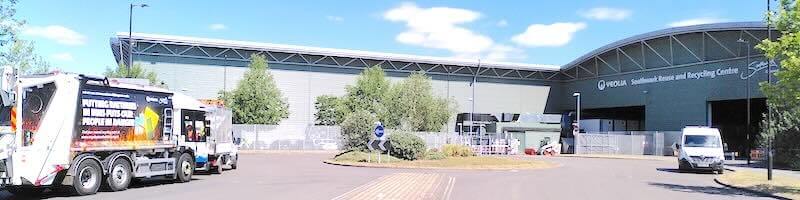
Many thanks again to Janine for organising the visit! Thanks also to Veolia for hosting and answering all our questions. See the IWMF Web site for videos and explanations.
Some interesting points as remembered:
- The plant accepts waste from about 2 million Londoners, though only some of Kingston's domestic waste streams.
- Kingston borough is recycling ~47% which is in the top few of London boroughs.
- Aluminimum (Al), though only a small fraction of the waste stream, is valuable at ~£1/kg, eg in the form of cans, so a lot of effort is made to recover this.
- Ferrous metals, eg steel cans, are also recovered and baled.
- Plastics are also recovered and baled.
- Paper and cardboard are recovered and compressed and baled with steel wire.
- Glass is co-mingled and ends up usually shattered in small pieces and becoming road aggregate.
- A lot of energy goes into reducing the moisture content of incoming materials before further processing.
- Batteries and WEEE are very tough and sometimes dangerous to deal with when (incorrectly) in the waste stream.
- There is significant solar PV on the facility's roof.
- A major National Grid substation (New Cross) is next door.
- This facility's downstream ERF (energy recovery) is SELCHP (South East London Combined Heat and Power), not Beddington.
One item mentioned is that the gaseous elements of the treatment process are treated with bacteria on wood chips, with this on the site:
The Mechanical Biological Treatment (MBT) plant processes rubbish collected from households across the borough. It uses a combination of mechanical and biological processes to sort the waste. The mechanical process separates some recyclable materials from the mixed waste, such as metals or glass. The biological process removes moisture from the waste before breaking down the organic components by way of a composting-like process to create fuel for energy recovery which is sent to [SELCHP].
Photos
I was not allowed to take photos inside the main building, so you do not get to see some of the fascinating machinery such as the eddy-current separator used to yank aluminium cans out of a mixed stream. Nor the humans on the separation belts. Nor the AI robot that seemed to be snoozing while I was watching. But here are a few:
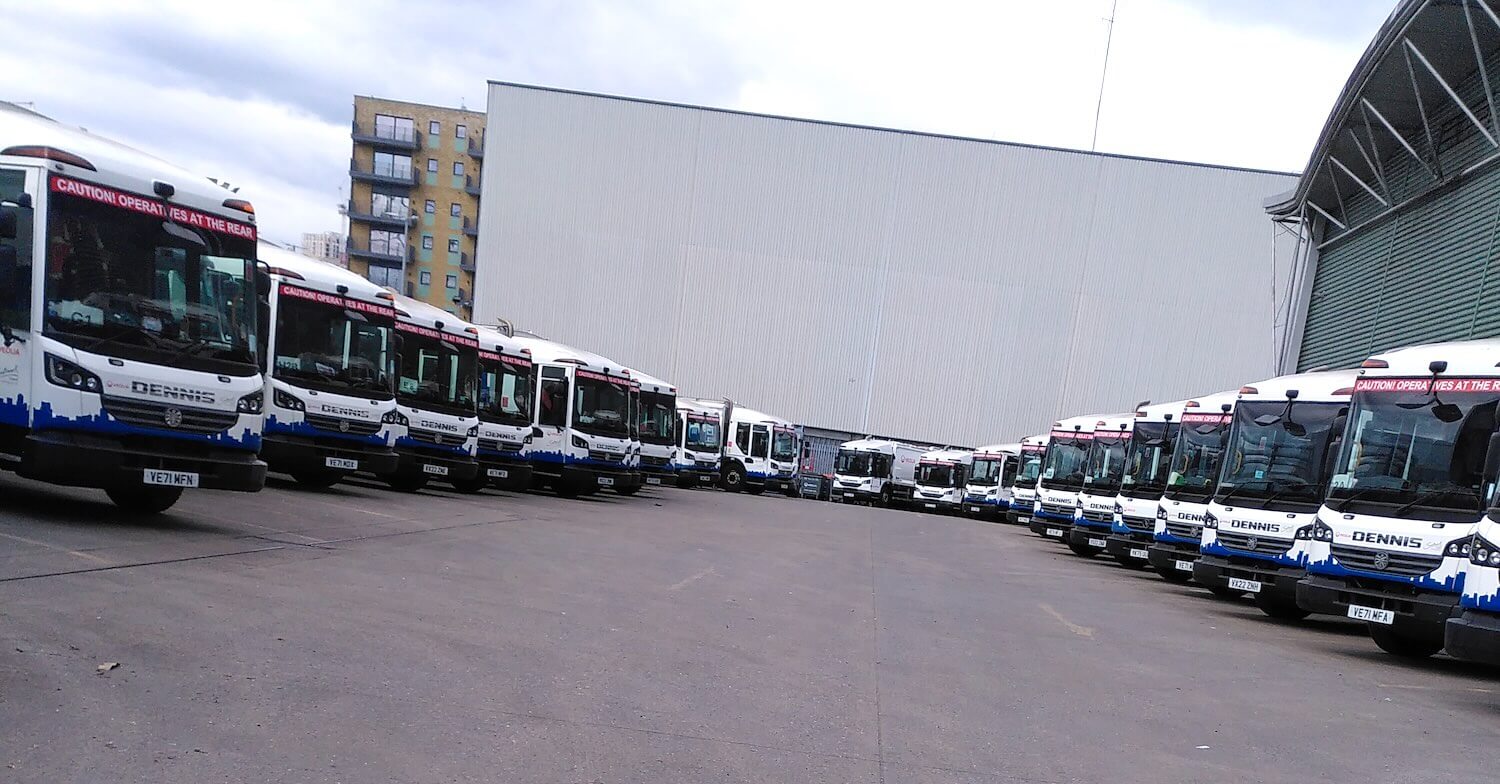
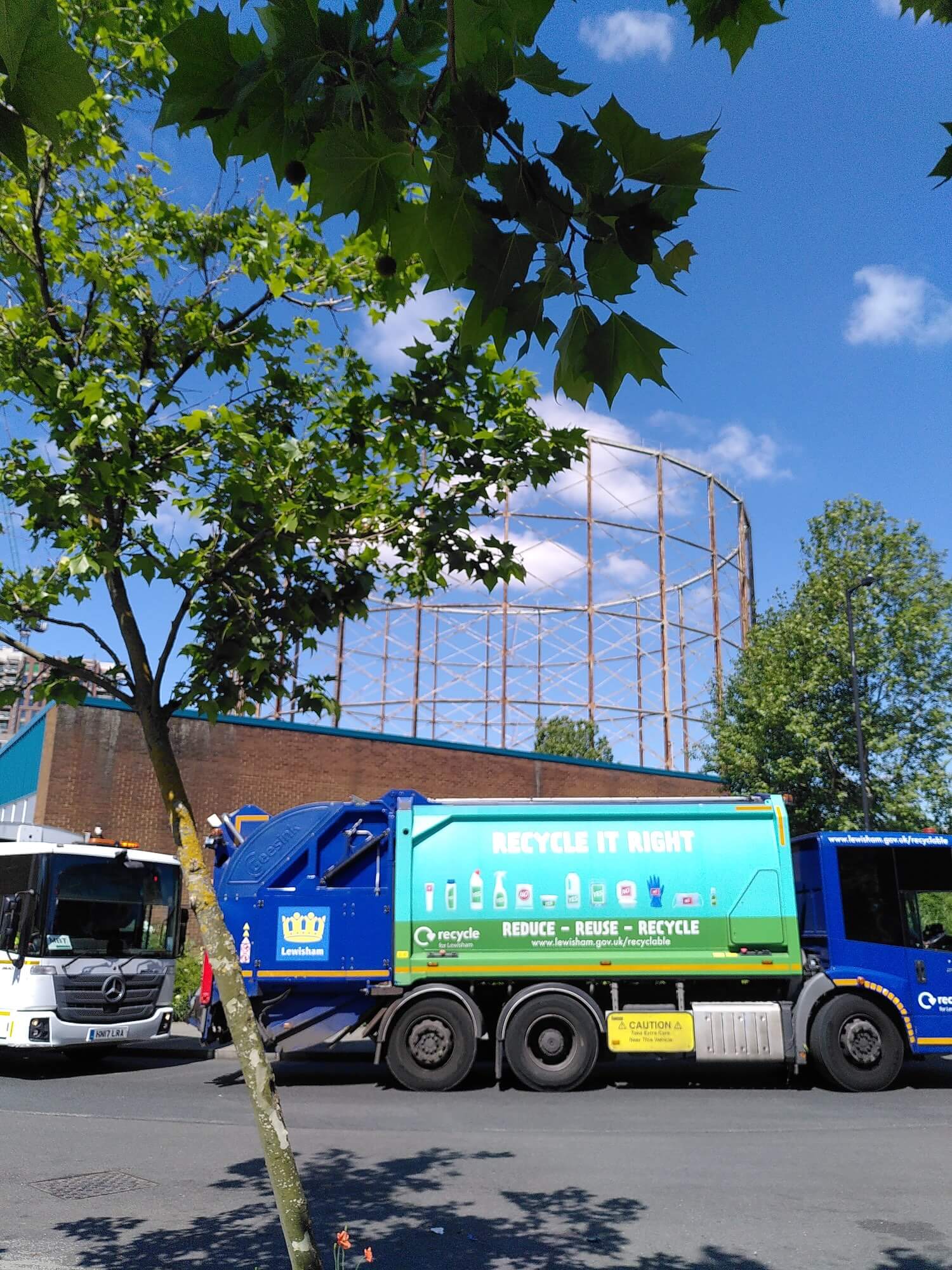
- Refuse-collection trucks/vehicles/dustcarts parked up en masse!
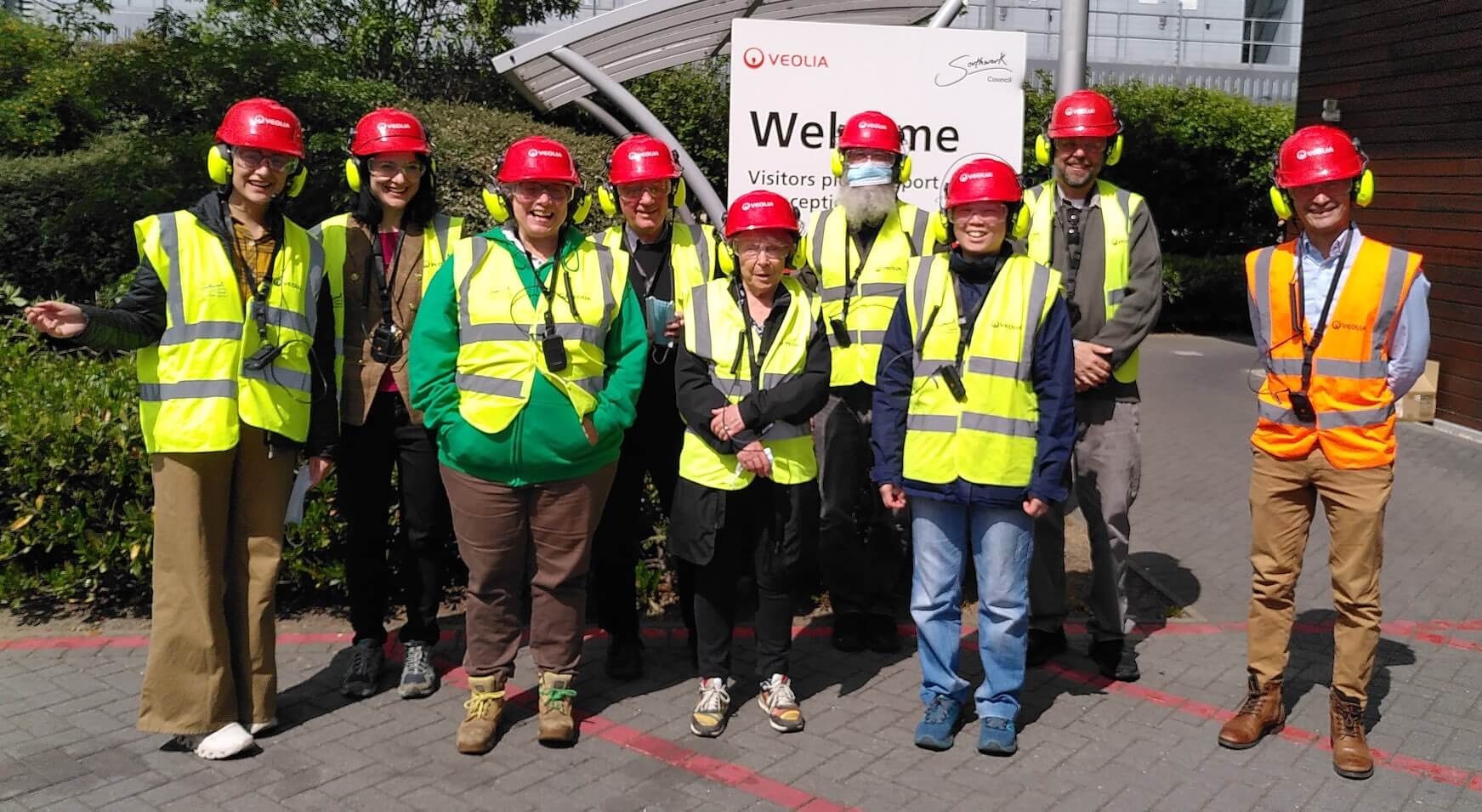
- Us visitors (and hosts) in PPE outside the visitors' entrance.
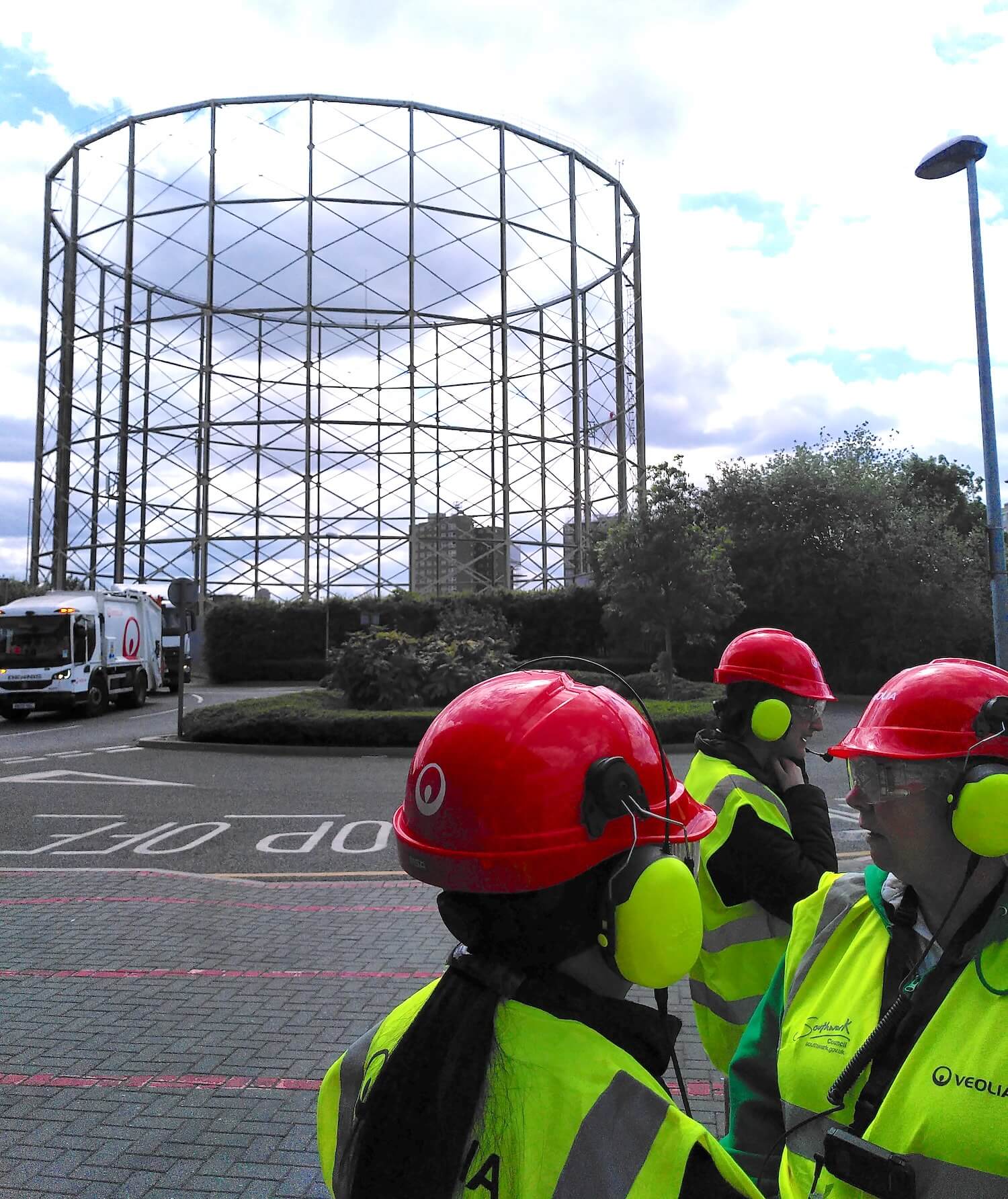
- Gas holder lattice against blue and cloudy sky, red hard-hats and green hi-viz.
- Trucks queueing, gas holder behind against blue-ish sky.
Smell and Noise
Approaching the facility the only whiff seemed to be from one of the trucks entering or leaving. Inside the facility was a bit more smelly, though not horribly so, and loud but again not horribly so. (The PPE issued to us included hearing protection.)
Being able to keep this within an urban area reduces the distance that waste has to be transported, which is a boon if the plant itself can be a good enough neighbour.
This visit was on a cool and slightly breezy day; things may be less pleasant on a hot still summer day for example.